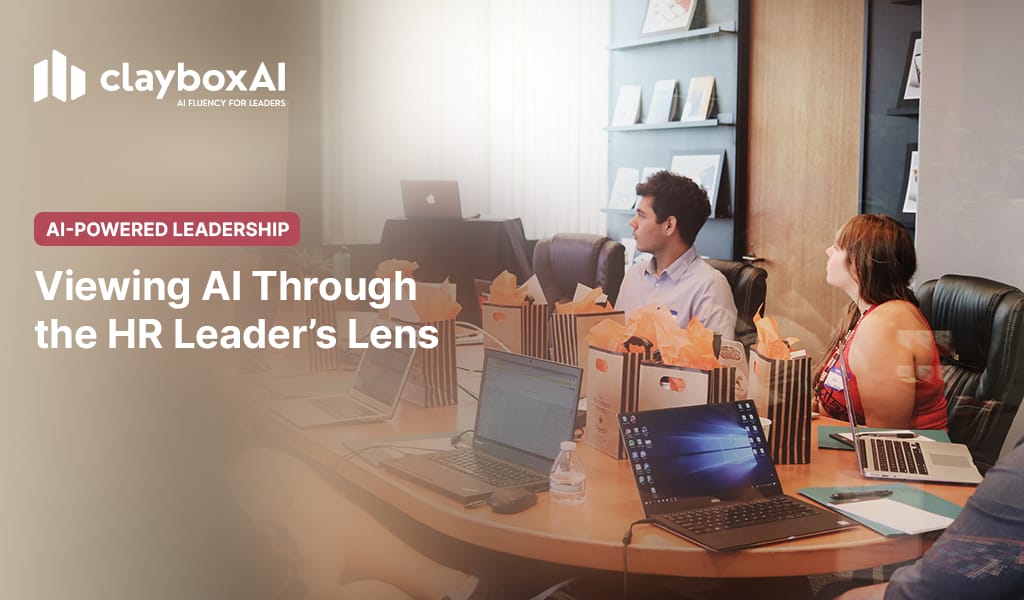
The business landscape has undergone a seismic shift: AI has broken free from the exclusive domain of the IT department, evolving from a futuristic concept into a tangible force reshaping the fabric of enterprise operations. Today, HR leaders – alongside colleagues across the organisation – have the power to directly harness AI’s capabilities, driving unprecedented levels of innovation and efficiency without being bound by traditional IT approval processes. The result is a more agile, data-driven organisation, where AI acts as a powerful catalyst, unlocking hidden value within human capital and delivering a significant competitive advantage.
AI has become the dominant force shaping both strategic priorities and day-to-day operations. Yet, while its vast potential is widely recognised, our research shows that the journey towards true integration and value realisation is still in its early stages.
HR Leaders Recognise AI’s Untapped Potential
While 54% of HR leaders currently use AI for recruitment support (e.g., resume scanning), their strategic vision extends far beyond this initial application.

The Voice of Asia’s HR Innovation
Real-world examples across Asia Pacific showcase the tangible impact of AI in HR. GenAI has streamlined presentation creation for bank employees, freeing up valuable time for content focus. Integrated GenAI knowledge bases have simplified access to internal information, enhancing employee efficiency. AI-driven recruitment screening is accelerating hiring in the insurance sector by efficiently identifying top candidates. Furthermore, AI-powered workforce management systems are revolutionizing field worker management through optimized job assignments and real-time tracking.
Navigating the Roadblocks to AI Adoption
Despite the promising potential of AI to transform HR, leaders in this vital function continue to face significant barriers to its widespread adoption.
Biggest AI Adoption Barriers for HR Leaders

Many HR leaders have yet to fully explore how AI can tackle challenges beyond recruitment, missing opportunities across other areas. Progress is further stalled by the lack of a unified organisational AI strategy, leaving initiatives fragmented, disconnected from business goals, and unable to realise AI’s full potential. Ethical concerns around transparency and bias also loom large, especially in performance and talent management. Building trust will require clear safeguards on data privacy, algorithmic fairness, and human oversight at every step.
CHRO’s Guide to Success
AI is no longer a peripheral tool in HR – it’s reshaping the core of human capital management. To fully harness its potential, HR leaders should:
- Set Clear Goals & KPIs. Don’t adopt AI without a strategic roadmap. Identify specific HR challenges where AI can deliver real value, and define measurable KPIs to track success – such as time-to-hire, cost-per-hire, and quality of new hires in recruitment. Ecosystm research shows 45% of HR leaders in Asia Pacific struggle to pinpoint the most impactful AI use cases, underscoring the need for clarity from the outset.
- Prioritise Ethics and Transparency. AI in HR handles sensitive employee and candidate data, making fairness, accountability, and transparency critical. HR must work closely with Technology and Compliance teams to ensure AI systems are unbiased, transparent to users, and compliant with data privacy laws. 35% of HR leaders cite ethical concerns, compared to just 27% of other enterprise stakeholders – highlighting the unique responsibility HR carries here.
- Champion Human-AI Collaboration. The future lies in augmenting, not replacing, human expertise. Automate routine tasks to free up HR teams for high-value work like employee engagement and talent development. At the same time, invest in AI skills so teams can collaborate effectively with new tools. Yet only 18% of HR leaders are prioritising AI skills upgrades for 2025 – signalling a potential bottleneck ahead.
- Claim a Seat at the AI Table. True success requires HR to be an active player in shaping the organisation’s AI strategy. Define HR-specific use cases, enable teams to manage AI tools beyond reliance on IT, and take ownership of HR data to drive outcomes. Currently, just 20% of HR leaders are involved in crafting their organisation’s AI strategy – a missed opportunity for greater influence in an AI-driven future.
HR Leaders Leading the Charge (or Should Be)
Despite the existing challenges, HR leaders are prioritising AI initiatives. Increased productivity is the top expected outcome, and a significant 30% plan to focus on identifying better HR-specific use cases as part of a broader data-centric approach.
The message is clear: HR needs to step up and claim its seat at the AI table. By proactively defining clear and impactful use cases, championing ethical considerations in AI deployment, and collaborating closely with technology teams, HR can transform itself into a strategic driver of AI adoption, unlocking the full potential of this transformative technology for the entire organisation. The future of HR is intelligent, and it’s time for HR leaders to embrace it with a clear vision and proactive engagement.